Ovarian cysts and when they matter
This page is reference information compiled from the cited sources. It is not medical advice. For any decision about health, diagnosis or care, consult a qualified professional.
What it is
An ovarian cyst is a fluid-filled sac within the ovary. Most ovarian cysts are related to ovulation, being either follicular cysts or corpus luteum cysts. Other types include cysts due to endometriosis, dermoid cysts, and cystadenomas. Many small cysts occur in both ovaries in polycystic ovary syndrome (PCOS). Functional cysts form as a normal part of the menstrual cycle. Non-functional cysts may include cysts caused by endometriosis, known as chocolate cysts, and hemorrhagic ovarian cysts. Dermoid cysts are the most common non-functional ovarian cyst, especially for women under the age of 30. Ovarian serous cystadenoma is more common in women between the age of 30 and 40. Ovarian mucinous cystadenoma can grow very large, with diameters sometimes exceeding 50 cm.
Key facts
The majority of cysts are harmless. Most ovarian cysts are related to ovulation. Most women of reproductive age develop small cysts each month. Large cysts that cause problems occur in about 8% of women before menopause. Ovarian cysts are present in about 16% of women after menopause, and, if present, are more likely to be cancerous. They usually cause no symptoms, but occasionally they may produce bloating, lower abdominal pain, or lower back pain. Some ovarian cysts become large enough to cause the lower abdomen to visibly swell. Ovarian cysts tend to produce non-specific symptoms. In other cases, the cyst is asymptomatic, and is discovered incidentally while doing medical imaging for another condition. Ovarian cysts and other "incidentalomas" of the uterine adnexa appear in almost 5% of CT scans done on women. The effect of cysts not related to PCOS on fertility is unclear.
When to seek professional help
Professional help is associated with cysts that do not go away after several months, get larger, look unusual, or cause pain. If the cyst either breaks open or causes twisting of the ovary, it may cause severe pain, which may result in vomiting or feeling faint. Sudden and sharp pain in the lower abdomen on one side may occur when a cyst ruptures from the ovary. Large cysts can cause a change in frequency or ease of urination or difficulty with bowel movements due to pressure. Rupture of large ovarian cysts can cause bleeding inside the abdominal cavity. Rarely, enough blood will be lost that the bleeding will produce hypovolemic shock, which can be a medical emergency requiring surgery. Ovarian torsion is a very painful medical condition requiring urgent surgery. It can be caused by a pedunculated ovarian cyst that twisted in a way that cuts off the blood flow. Diagnosis is undertaken by pelvic examination with a pelvic ultrasound or other testing used to gather further details. Follow-up imaging in women of reproductive age for incidentally discovered simple cysts on ultrasound is not needed until 5 cm. Simple cysts 5 to 7 cm in premenopausal females should be followed yearly. Simple cysts larger than 7 cm require further imaging with MRI or surgical assessment. In postmenopausal women, any simple cyst greater than 1 cm but less than 7 cm needs yearly follow-up, while those greater than 7 cm need MRI or surgical evaluation. For incidentally discovered dermoids, either surgical removal or yearly follow up is indicated.
Source: Ovarian cyst (CC BY-SA 4.0 (Wikipedia)), retrieved 2026-10-02.
Latest reporting
Embryo Transfer Boosts Pregnancy Success in Women with IBD
New research shows women with inflammatory bowel disease (IBD) have dramatically higher pregnancy rates with embryo transfer (73%) than with...
Opportunistic Salpingectomy Offers Ovarian Cancer Prevention
Removing fallopian tubes during other abdominal surgeries can drastically cut ovarian cancer risk.

FDA Approves Camizestrant for Early ESR1-Mutant Breast Cancer
The FDA granted accelerated approval to camizestrant for HR+/HER2- breast cancer when ESR1 resistance mutations are first detected during initial...

PCOS Renamed Polyendocrine Metabolic Ovarian Syndrome
A global consensus process has renamed polycystic ovary syndrome to polyendocrine metabolic ovarian syndrome.
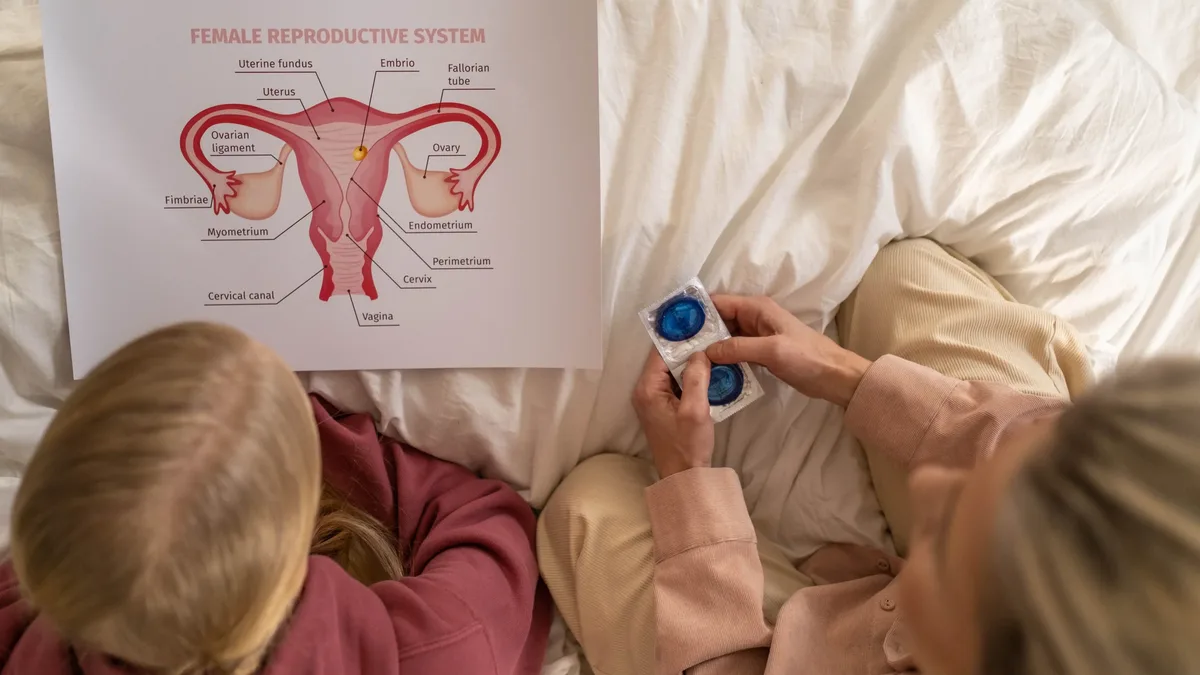
PMOS Health Risks Extend Beyond Menopause
A 2026 review by UCSF doctors finds Polyendocrine Metabolic Ovarian Syndrome (PMOS) is a lifelong condition. While some reproductive symptoms ease...

Yale Study Maps Age-Related Decline in Ovarian Reserve
A new study from Yale University describes how the density of primordial follicles in ovarian tissue declines with age.