GLP-1 Drugs Show Promise in Treating PMOS
GLP-1 drugs show promise in treating polyendocrine metabolic ovarian syndrome.

Charlotte Touzalin, an 18-year-old college student from Colorado, was diagnosed with polyendocrine metabolic ovarian syndrome (PMOS), a hormonal condition affecting 1 in 8 women worldwide. She took part in a study testing GLP-1 drugs as a treatment and saw improvements in her symptoms, including weight loss and normalized periods.
PMOS Symptoms and Diagnosis
PMOS is a mysterious and maddening disease, with symptoms that overlap with other conditions and may be dismissed by doctors. The disorder tends to run in families, and many but not all women affected carry excess weight. Two hormones, insulin and testosterone, are key drivers of PMOS, with most women having insulin resistance, regardless of their body size.
Touzalin and her mom, Anne Schultz, 43, have both struggled with PMOS, experiencing symptoms such as irregular periods, bloating, and unwanted facial hair. Schultz had problems with her ovaries and numerous miscarriages, which are more common with PMOS. They both faced a long and frustrating journey to diagnosis, with various diagnoses and treatments before finally being diagnosed with PMOS.
GLP-1 Drugs as a Treatment
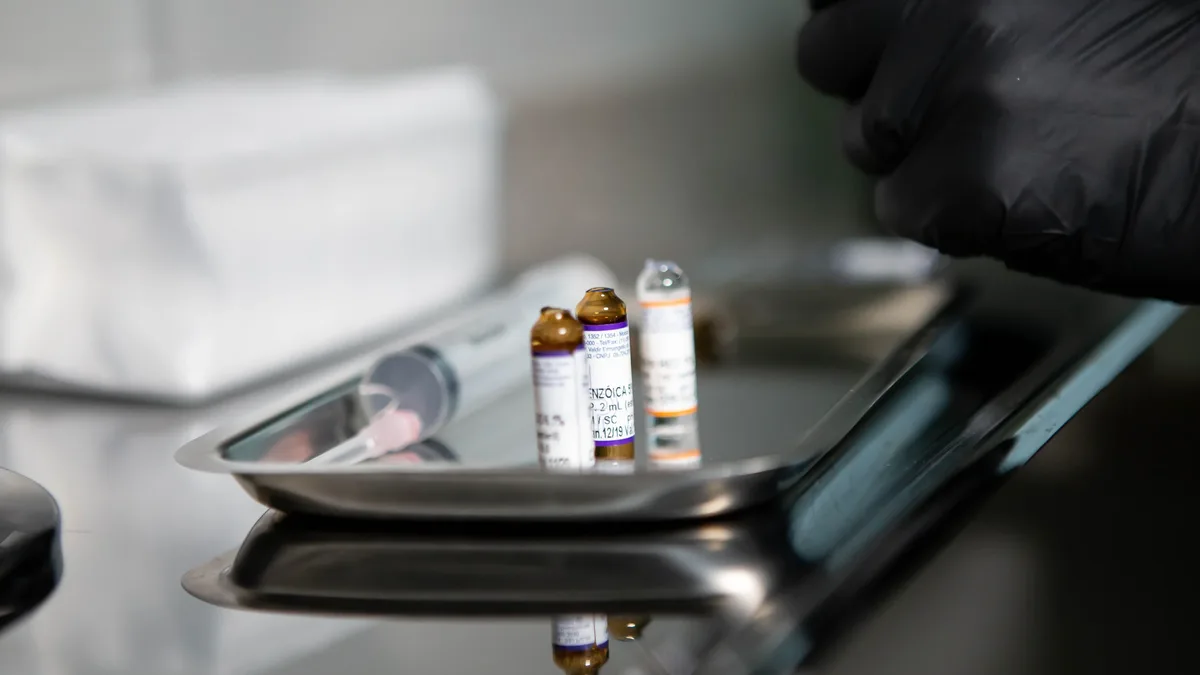
A small but growing body of research shows that GLP-1 drugs, typically used to treat obesity, may also work for PMOS. These drugs have been shown to promote weight loss, improve insulin resistance, hormone balance, and ovulation. In a study led by Melanie Cree, MD, PhD, eight of 11 participants completing the trial lost at least 10% of their body weight, with a median weight loss of about 42 pounds and a median drop in testosterone of 52%.
The following table summarizes the results of the study:
Insurance Coverage and Future Research
While research on GLP-1s for PMOS continues, insurers are putting up barriers to coverage. The drugs are not approved to treat PMOS, and some insurers don't cover them for weight loss. Doctors are prescribing the drugs "off label" for PMOS and seeing improvements in their patients, but insurance coverage is often a problem. Touzalin recently ran into this barrier herself, having to go off the medication after finishing her study participation. Her mom is determined to get her back on the medication, fighting with their insurer and exploring alternative options.
Touzalin hopes for a day when any PMOS patient can get the treatment if she needs it, saying "it's something that could help a lot of other people." According to Rana Malek, MD, an endocrinologist with the University of Maryland Medical System in Baltimore, GLP-1s can help a lot of PMOS patients, but results vary and insurance issues can be frustrating. As research continues, more and more doctors are prescribing the drugs "off label" for PMOS, seeing improvements in their patients.